Historical Trans Britain Timeline
This timeline presents transgender history within Great Britain and Northern Ireland, dating from 4 AD to present day.
We have collected key events and individuals, however this is not a complete history and we encourage you to use this timeline as an initial source for further research. This timeline includes historical references to ‘female-husbands’, transgender societies, film and television, as well as legal impacts on transgender identities.

First Official Pride March, London, 1972
Search our timeline for key phrases or dates with ease by pressing CTRL F on your keyboard. Alternatively, click on the bullet points below to go to a particular time period.
Terms that are underlined and pink are linked to the terminology page.
This timeline is broken down into the following periods:
Timeline themes include:
-
Female-husbands
-
Legal framework/acts of parliament
-
Transgender Pioneers
-
Medical
-
Organisations/societies/events
-
TV/Film
-
FTM/MTF
Eleanor/ John Rykener (December 1395)
Eleanor/ John Rykener arrested in Soper's Lane, Cheapside, London for having sex with John Britby while dressed in women's clothing. Once found to be assigned male at birth, they were accused of 'committing that detestable unmentionable and ignominious vice' (anal sex). The outcome of the trail is unknown.
Buggery Act (December 1533 - 1967)
Henry VIII criminalised homosexual activity under the Buggery Act of 1533. The first person to be executed under the act was Walter Hungerford in 1540 for the crimes of treason, witchcraft and buggery. The final execution under the Buggery Act happened in 1835, with it being repealed in England and Wales in 1967.
https://www.hrp.org.uk/blog/walter-hungerford-and-the-buggery-act/
Chevalier d'Eon (1728 - 1810)
D'Eon was a French spy, diplomat and soldier who spent her early years living as a man and later years as a woman, living in Soho and dressing in women's clothing.
In 1787, she won a fencing match against the Chevalier de Saint-George in Carlton House, London. This match was depicted in art, engravings and satire. d'Eon is the most 'widely known gender transgressor in modern history' and the dual presentation of her gender identity (her claim that her initial years living as a man was solely due to inheritance reasons and she had been born a woman), became a hot debate in British society. After her death she was found to have been assigned male at birth.
Burns, C. (2018) Trans Britain. [edition unavailable]. Unbound. Available at: https://www.perlego.com/book/1437931
Charles Hamilton 'The Female Husband' (1746)
Hamilton married several women, earning the nickname of ‘female husband’. As Dr Charles Hamilton he married his landlady's niece, Mary Price, in Wells, Somerset.
However, Price later discovered Hamilton’s biological sex and Hamilton was sentenced to public whippings in four Somerset towns plus six months imprisonment.
Eliza Edwards (1790 - 1833)
An actress and sex worker, Eliza (who also went by Lavinia) worked mainly in Tewkesbury, Norwich and other theatres. Eliza was supported by various gentlemen, however had fallen on hard times close to her death and had sold her piano, jewels and stage dresses. After her death, her body was sent for dissection where it was discovered that she was assigned male at birth.
Mary Ann Talbot (1790 - 1804)
Talbot took part in battles during the French Revolutionary Wars during the 1790s as John Taylor, of which she later released a memoir about.
When her biological sex was revealed, she was sent to a lodging in Shoe Lane, London to try and break 'masculine habit[s]'. Talbot/Taylor continued to dress as a sailor and drink with former messmates however.
Helen Oliver/John Oliver (1822)
Oliver was brought up in Saltcoat, Scotland and assigned female at birth. While still living as a woman and working as a servant, Oliver started a relationship with a ploughman, who was discovered to have been assigned female at birth.
In 1818, aged 23, Oliver left his job, took a suit from his brother John's room and left. He took on his brother's identity and travelled across Scotland before finding trade as a plasterer. John then met a woman and they were about to be wed, but not much is known after.
https://www.lovebritishhistory.co.uk/2025/02/lgbtq-georgians-helen-oliver-of-scotland.html
Harry Stokes (1859)
Harry Stokes, a 50-year-old labourer who had worked as a bricksetter for 30 to 40 years and had married a woman, died by suicide and was discovered at his autopsy to have been assigned female at birth.
Burns, C. (2018) Trans Britain. [edition unavailable]. Unbound. Available at:
https://www.perlego.com/book/1437931 (Accessed: 29 July 2025).
Boulton and Park Trail (1870)
While exiting the Strand Theatre London, Boulton and Park (known as Stella and Fanny) were arrested for outraging public decency for wearing women's clothes in public. They were theatre performers, but often dressed as women off-stage. They were also charged with committing buggery. They were found not guilty of the felony charges against them, possibly because Victorian law struggled to make sense of their identities in a way that allowed the police to prove their case.
https://www.liverpool.ac.uk/history/blog/2025/gender-diversity-history-boulton-park/
Hulme Drag Ball (1880)
In September 1880, police raided a Temperance Hall which had been hired under the guise of an annual 'Pawnbrokers Assistants Party' but was actually a drag ball. 47 were arrested for 'grotesque dancing' and their personal details wee published in the media to humiliate.
Studies in the Psychology of Sex Vol. II - Sexual Inversion (1897)
Physician Havelock Ellis published the second volume of his Studies in the Psychology of Sex which looks at 'sexual inversion' through a biological, psychological and social lens. Ellis conducts interviews with a number of anonymous individuals who provide first hand accounts of their sexuality and gender, with some accounts describing experiences of gender dysphoria or incongruence, and highlights the need for scientific and scholarly attention to the topic.
‘"Ever since I can remember anything at all I could never think of myself as a girl and I was in perpetual trouble, with this as the real reason. When I was 5 or 6 years old I began to say to myself that, whatever anyone said, if I was not a boy at any rate I was not a girl. This has been my unchanged conviction all through my life" - ‘Miss D.’, anonymous interviewee of Havelock Ellis
Magnus Hirschfeld Coins 'Transvetites' (1910)
Hirschfeld, a Berlin-based clinician publishes 'Transvestites: The Erotic Drive to Cross-Dress', coining the term. The Hirschfeld Institute for Sexual Science, founded in 1919 would go on to develop surgical techniques that would go on to help transgender individuals receive gender confirmation surgery.
In 1928 Hirschfeld founded the World League for Sexual Reform, an international organisation that aimed to coordinate policy reforms to increase sexual freedom. British physician Havelock Ellis was elected as one of its first presidents, along with Hirschfeld and Swiss psychiatrist Auguste Forel. However, in 1933, the Institute was pillaged by the Nazis and its library was burned, destroying much of the Institute’s records and the then-largest existing collection of writing by and about trans people.
Burns, C. (2018) Trans Britain. [edition unavailable]. Unbound. Available at:
Michael Dillon (1915 - 1962)
First trans man to have a penis constructed via phalloplasty. He succeeded in getting his birth certificate changed to reflect his gender in 1944. His genital reconstruction surgery was carried out by pioneering plastic surgeon Sir Harold Gillies, and required a total of thirteen surgeries. Dillon trained and qualified as a doctor. He was outed by the Sunday Express 1958.
Sex Change Term (1920 - 1930)
From the late 1920s into the 1930s, the term 'sex change' was used by the British press. This included both medical aid in changing sex, as well as cases where bodily changes happened or appeared to happen naturally. The distinction was not well-understood, and some trans people who had had medical intervention publicly claimed that their transition happened naturally, including Roberta Cowell.
Jan Morris (1926 - 2020)
Born in Somerset, Jan Morris was an award-winning journalist, novelist and staunch Welsh nationalist. Jan documented feelings of gender dysphoria at aged three or four. Jan trained as a newspaper reporter in Bristol at the height of WW2 before completing a fellowship at the University of Chicago and marrying Elizabeth Tuckniss in 1949.
After a successful career, Morris left journalism in 1960 to be a travel writer and in the same year started taking female hormones with the support of Elizabeth, despite the requirement for the couple to divorce due to same-sex marriage being illegal. Morris published Conundrum in 1974 which was a worldwide bestseller, and documents her surgery in Casablanca and her adjustment to life as a woman. Jan passed away in 2020 at the age of 94.
Mark Weston (1928)
Born with an intersex condition, Weston competed as Mary Weston at the 1928 Olympic Games in Amsterdam. However, after the games Weston felt unable to continue living as a woman and eventually had two operations performed by Lennox Boster at Charing Cross Hospital, London.
His transition made headlines in 1936 with the News of the World reporting on the "Girl" Athlete's New Life after Change of Sex”. He went on to marry his childhood friend, Alberta Bray, without any legal injecture. His younger brother Harry was also intersex and transitioned, however died by suicide in 1942
Burns, C. (2018) Trans Britain. [edition unavailable]. Unbound. Available at:
April Ashley (1935 - 2021)
Ashley, born in 1935, was a transgender model who underwent gender-affirming surgery in Casablanca in 1960. She met aristocrat Arthur Corbett in 1960 and was outed by the Sunday People in 1961. However, her marriage to Arthur Corbett in 1971 was annulled by the Court due to Ashley being determined as male.
This set a precedent in that transgender people's legal identity was the gender they were born at birth. Ashley continued to fight for recognition of transgender identities and in 2012 was awarded an MBE by Buckingham Palace.
Mark and David Ferrow (1939)
Mark and David Ferrow, born in Yarmouth, were brothers who transitioned in their mid-teens becoming some of the first trans men in the UK to medically transition. Mark transitioned first at age 13 and David followed two years later.
Their parents sent them to an art school in Maidstone that was paid for by an anonymous local woman. They received some media attention between 1939 and 1940 during the time they started hormones and were potentially the first trans minors to transition with the then-newly developed synthetic hormones. The media coverage was generally supportive and the brothers were well supported throughout their lives and both brothers lived long, happy lives relatively under the radar.
Erlick, E. (2025) Before Gender. pp. 37-42. Manchester University Press.
Available at:
Mark Rees (1942 - 2023)
Mark Rees autobiography 'Dear Sir or Madam' documents his journey and transition into his masculine identity.
In 1971, after his transition, he attempted to be ordained into the Church of England but was ultimately rejected due to his legal sex remaining female. This prompted Rees to fight for legal recognition in 1972 in the European Court of Human Rights, but he ultimately lost his court case in 1986. While Rees faced negative media attention, he was encouraged to join the Liberal Democrat party and was elected as a Member of Tunbridge Wells Borough Council from 1994-98.
Rees also founded the trans right campaign 'Press for Change' which saw him speak at local, regional and national conferences between 1986-2001. Rees continued to engage and challenge the Church, especially after some of the bishops in the House of Lords opposed the Gender Recognition Bill.
The First International Symposium on Gender Identity (July 25th 1969 - July 27th 1969)
The First International Symposium on Gender Identity: Aims, Functions and Clinical Problems of a Gender Identity Unit was a medical conference which took place in Piccadilly Hotel in London. Erickson Educational Foundation and the Albany Trust of London sponsored the event.
Corbett vs Corbett (1971)
April Ashley met aristocrat Captain Arthur Corbett, six months after her sex change. Corbett was a cross-dresser and unhappily married and Corbett and Ashley began an off-again, on-again relationship over the next three years. They eventually married in 1963, however after 14 days they called off the marriage, with Corbett claiming it was invalid due to Ashley's biological sex being male. This was the first time that an English Court had been asked to rule on the sex of an individual, which they decided that 'birth chromosomes, gonads, and genitals establish sex regardless of any psychological condition.
https://sex-matters.org/posts/the-legal-system/corbett-v-corbett/
First Official Pride March in London (1972)
The first pride march in the UK, organised as close to the anniversary of the Stonewall uprising in New York, saw all LGBT individuals included. The first march was heavily politicised and policed, with an attendance of between 1000-2000 people.
Open Door 'Transex Liberation Group' (1973)
TV programme 'Open Door', pushed for by David Attenborough, allowed minority groups to have a place in mainstream media. The first episode featured the Transex Liberation Group and saw four trans women discuss topics such as their transition, healthcare, relationships and employment.
Judy Cousins Creates SHAFT (1979)
SHAFT (Self Help Association for Transsexuals) was founded by Judy cousins in 1979, becoming the major UK group for transsexuals at the time. Richard Ekins became SHAFT librarian and Alice Purnell edited the Shaft Newsletter from 1984, with Cousins teaching sculpture. In 1989, SHAFT reorganised as The Gender (Dysphoria) Trust with Judy as non-executive President.
https://zagria.blogspot.com/2011/07/judy-cousins-1917-1993-soldier-sculpter.html
LSE holds SHAFT newsletters and other prints: https://archives.lse.ac.uk/records/WHITTLE/5/2
Sex Change-Shock! Horror Probe! (1988)
A documentary by Kris Clarke that premiered on Channel 4 in Spring 1989, it marks the first ever programme broadcast in the UK by a transgender filmmaker about 'transsexualism'. Interviewing transgender people such as Mark Rees, Rachel Webb, Adele Anderson and Stephanie Anne Lloyd, the documentary provided a more positive and personal account of transgenderism that wasn't overly sensationalised or demonised (as often was in UK media).
https://www.transgendermediaportal.org/media/WORK_000361.html
The Mermaid Charity Founded (1995)
Founded by a group of parents who all had children with gender issues, the charity offers resources to young people, families, carers and professionals working with gender diverse young people.
https://www.stonewall.org.uk/resources/key-dates-lesbian-gay-bi-and-trans-equality
Character Hayley Cooper - Coronation Street (1997 - 2014)
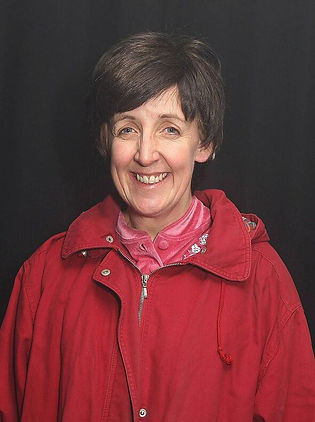
The long running British soap featured a transgender character since 1997, however she was played by Julie Hesmondhalgh (below), a cisgender woman. In an effort to improve the representation of trans people in the media, following similar actions in the United States and through the lobbying of groups like All About Trans, the character had a fictional death in 2014 to make way for trans actors playing trans characters. This could be seen through the introduction of Riley Carter Millington, a trans man, on EastEnders at the end of 2015 and the permanent role of trans actress Annie Wallace in Hollyoaks.
Burns, C. (2018) Trans Britain. [edition unavailable]. Unbound. Available at:
Grave of 'gallus' uncovered (4 AD)
Earliest LGBTQ location: Cataractonium (present day Catterick in North Yorkshire).
Uncovered grave of a ‘gallus’ - assigned male at birth but dedicated themselves to the goddess Cybele through self-castrating, cross-dressing and taking a woman’s role. Cross-dressing included jewellery and other female accessories.
Mary East/James How(e) (1716 - 1780)
'Mary East, the Female Husband' was reported in the London Chronicle in 1766 and retold by Bram Stoker (author of Dracula) in 1910.
The London Chronicle reported that Mary East and her friend decided to dress as man and woman and be married after they both experienced unhappy affairs with men. East assumed the name James How and they lived together for three decades and ran successful taverns in Epping, Limehouse and finally the White Horse on Poplar High Street where 'James Howes' is recorded as the landlord in 1745.
During their marriage, they were subjected to blackmail and robbery which led to a court case where James How(e) appeared as Mary East and caused a stir within the audience. Mary East lived as a woman for the rest of her life and died in June 1780, leaving money to friends, relatives and the poor people of Poplar.
Samuel Bundy (1739)
Samuel Bundy and Mary Parlour married in 1759. After being searched by their neighbours, Bundy was discovered to be assigned female at birth.
Samuel stated that after being taken away from his mother at 13, he was seduced by a male artist who then dressed him in boys' clothing to avoid pursuit. Samuel continued living as a man and was eventually imprisoned for the 'fraud', however Mary continued to visit often.
After Samuel was released, he lived life as a woman, however not much is known after this.
https://www.lovebritishhistory.co.uk/2024/11/lgbtq-georgian-britain-samuel-bundy-and.html
James Allen (1787 - 1829)
Allen’s assigned sex was discovered upon his death in 1829, where he was struck by a piece of timber.
He was noted to be a hard, industrious worker. His wife insisted she was unaware of his birth assigned sex, although some articles claimed that she did know, and had made plans to prepare his body for burial herself to avoid examination during a previous illness. At his funeral, due to his assigned sex having been reported in the newspapers, extra precautions had to be taken so that his body was not taken by doctors for dissection. An inquest was later held.
Another similar case was John Coulter, which you can read about here:
https://www.britishnewspaperarchive.co.uk/viewer/bl/0004160/18840122/041/0004
https://www.geriwalton.com/a-regency-era-female-husband-james-allen/
James Barry (1795 - 1865)
The first doctor known to have been assigned female at birth, Barry studied medicine at the University of Edinburgh from 1809-1812. Barry worked at St Thomas' Hospital in London before becoming a medical officer and being sent to South Africa, where he performed the first successful Caesarean section in which both mother and baby survived in 1826.
Barry was not popular with his colleagues, and in particular did not get on with Florence Nightingale. After Barry's death from dysentery in 1865, his assigned sex was discovered, which caused much scandal. In 1905, historian Isobel Rae and doctor Michael du Preez retraced Barry's family history and life.
https://medicine-vet-medicine.ed.ac.uk/about/history/historic-alumni/james-barry
Harry Lloyd (1836 - 1910)
Born in Brussels, France, Lloyd (then known as Mary Le Roy) moved to England in the 1860s. He worked as a governess and was involved with a freethinking circle in the 1870s associated with Charles Bradlaugh, Austin Holyoake and John Stuart Mill. He wore his hair short and was regarded as a ‘new woman’. He also lectured at the Freethinkers hall teaching and translating French, German and Flemish.
He eventually transitioned to become Harry Lloyd Le Roy and married Eliza Condoit. Eliza gave birth to a daughter, Elizabeth in 1884, whom Harry raised as his own. Harry worked as a linguist, an auctioneer, manager of a boarding house and newsagent and after Eliza’s death in 1890 raised Elizabeth alone. When Harry died in 1910, the physical examination established that Harry was assigned female at birth, astonishing Elizabeth.
https://zagria.blogspot.com/2010/11/harry-lloyd-1836-1910-translator.html#.W2C91X4naYU
John Smith/Sophia Locke (1838)
A 'cooper and tinker' from Macclesfield, Smith died of dysentery.
Smith and his wife had been living in occupation together, while Smith worked, although the wife later denied marriage. According to press reports, Smith’s father was a travelling tinker and scissor-grinder.
Smith had started wearing boy’s clothes from the age of three and while local people were aware of his assigned sex, they kept his secret.
Wynsley Michael Swan (1874 - 1949)
Swan transitioned in 1927, where he married a woman and changed his name. Previously, Swan had served as a Lieutenant-Colonel in the Women's Army Corps during the First World War. After Swan's death in 1949, a case came to court about a residue in trust under his birth name, and whether his wife could inherit it. The judge ruled that the name in the trust was the same person as Wynsley, and that as his widow was his lawful wife, she could inherit it.
https://trove.nla.gov.au/newspaper/article/275362971#
https://zagria.blogspot.com/2009/02/wynsley-michael-swan-1949-lieutenant.html
A Problem in Modern Ethics (1891)
John Addington Symonds published A Problem in Modern Ethics, which describes people who might now be called trans women:
‘In their boyhood they exhibited a marked disinclination for the games of their school-fellows, and preferred to consort with girls. They helped their mothers in the household, learned to sew and knit, caught at every opportunity of dressing up in female clothes. Later on, they began to call themselves by names of women, avoided the society of normal comrades, hated sport and physical exercise, were averse to smoking and drinking, could not whistle. Whether they refrained from swearing is not recorded. Many of them developed a taste for music, and prided themselves upon their culture. Eventually, when they became unclassed, they occupied themselves with toilette, scandal, tea, and talk about their lovers--dressed as far as possible in female clothes, painted, perfumed and curled their hair--addressed each other in the feminine
gender, adopted pseudonyms of Countess or of Princess, and lived the life of women of a dubious demi-monde.’
This book investigates 'sexual inversion', a conception of homosexuality that also encompasses many elements of what we might now call trans identity. As a gay man himself, Symonds challenges attitudes to homosexuality in Victorian Britain and argues that sexual inversion is not a choice but a natural inclination.
https://www.goodreads.com/book/show/13264620-a-problem-in-modern-ethics
1900
Paul Downing (1905)
Downing, a Black farm labourer from Kent was arrested on Blackfriars Bridge, London for chasing and shouting at buses alleging he was looking for his wife. Downing was discovered to be assigned female at birth. He was sent to the City of London Asylum and died within a year of being incarcerated.
Ewan Forbes-Sempill (1912 - 1991)
In September 1952, Time magazine reported that Dr E. Forbes-Sempill wished to be known going forward as Dr Ewan Forbes-Sempill, but did not report that the 'E' initially stood for Elizabeth, known as the second daughter of the 18th Baron Sempill.
Due to Scotland officials sealing the records, the media didn't manage to report the story- therefore, such as in the case of April Ashley, she could not use Forbes-Sempill's story as a legal precedent.
Burns, C. (2018) Trans Britain. [edition unavailable]. Unbound. Available at:
Roberta Cowell (1918 - 2011)
Cowell was a Spitfire pilot during WW2 and a racing car driver in the 1930s. Cowell consulted psychiatrists in the late 1940s and began living as a woman. Dillon assisted Cowell in 1949 to undergo an orchidectomy (removal of the testicles), which was both an unofficial procedure and an illegal one. Dr Harold Gillies then performed a vaginoplasty on Cowell in 1951.
Colonel Victor Barker (1923 - 1950)
Barker, who was assigned female at birth, lived as a man and was a restaurateur and boxer who masqueraded as a war hero.
In 1923, he married Elfrida Haward at St Peter's Church in Brighton, but she left him after she discovered his infidelity. In 1926 he joined the National Fascisti, a splinter group from the British Fascists. Barker was arrested in 1929 for non-payment of debts and his assigned sex was discovered. He was eventually prosecuted for making a false statement in order to marry Haward. Barker was convicted at the Old Bailey in 1929 and moved to a woman's prison in Holloway.
He was eventually released and made money through appearing in a Blackpool seafront show in 1937 called 'Strange Honeymoon', in which Barker and his ‘wife’ occupied two beds. The public were invited to guess whether Barker was a man or a woman. Barker refused to align with either transsexual or homosexual identities in interviews in the 1950s, protecting his privacy instead.
'Enoism' coined by Havelock Ellis (1928)
'Enoism' refers to the adoption of traditionally female dress and behaviour by a man. Ellis first wrote about enoism in Studies in the psychology of sex. Vol. VII in 1928.
https://www.collinsdictionary.com/dictionary/english/eonism
1930 - 70
Charing Cross Hospital (1930 - 1950)
Lennox Broster's work at Charing Cross made the hospital a centre for gender-related medical practice and patients were generally given a choice about which gender they wished to present as. The ability to prescribe hormone treatment or undergo plastic surgery became available in the 1950s.
Rachel Webb (1940 - 2009)
Webb was the first (currently known) elected trans person, who became a Labour councillor in Lambeth during the early 1980s. She was also a feminist and former lorry driver.
https://www.transgendermediaportal.org/person/PERS_000438.html
Burns, C. (2018) Trans Britain. [edition unavailable]. Unbound. Available at:
Caroline Cossey (1954 - present)
Cossey, also known as 'Tula' is an actress, dancer and model who appeared as an extra in the 1981 James Bond film For Your Eyes Only. She fought to challenge discriminatory UK laws by taking them to the European Court of Human Rights in the 1990s. She was outed by the News of the World in 1981. Her marriage was annulled due to her birth certificate being amended to reflect her biological sex.
https://www.thepinknews.com/2025/06/02/transgender-james-bond-girl-caroline-cossey/
Beaumont Society (1966)
Taking inspiration from Chevalier d'Eon's full birth name, the society was established as a support group for male-to-female cross-dressers. For many years it accepted heterosexual male cross-dressers only, excluding both gay and trans people. They held an annual dinner at Broadcasting House in the 1970s and 80s before moving to New Kensington Town Hall. They helped organise the first conference by and for trans and gender-diverse people at the University of Leeds in 1974, called 'Transvestism and Transsexualism in Modern Society'.
1970 - 80
Trans Activism Increases Post-Stonewall 1970
The raiding of popular gay venue 'Stonewall Inn' on the 28th June 1969 led to a week of protests against the police. Lesbians and trans women of colour were at the forefront of the movement. This inspired many organisations such as the Campaign for Homosexual Equality (CHE) in 1969, the Gay Liberation Front in 1970- 1973 and eventually London Pride.
https://www.londonmuseum.org.uk/collections/london-stories/how-london-pride-began/
Carol Riddell presented the paper 'Transvestism and the Tyranny of Gender' (1972)
"In the paper, Riddell called for transvestite and transsexuals to join "with other sexually persecuted minorities, particularly, homosexuals, in confrontation with the police, the legal profession, the psychiatrists, the capitalist nuclear family, capitalist gender roles, capitalist attitudes, and fundamentally the capitalist system itself"(Wikipedia)
The UK's First National Trans Conference (1974)
The conference was held at the University of Leeds over the weekend of the 16-17 March 1974 and was organised by the Beaumont Society. The conference featured a range of talks, discussions, offered support, film screenings, disco dances and stalls. It was a brilliant networking opportunity and allowed for legal and medical options to be discussed freely. Although, the Beaumont society was restricted to people assigned male at birth, ignoring trans-men and non-binary people.
https://wyqs.co.uk/stories/the-uks-first-national-trans-conference/
Transcript: https://transphilez.netlify.app/events/firsttransconferenceleeds/
A 'Change of Sex' Documentary (1980)
British documentary aired on BBC which follows Julia Grant on her social and medical transition. The documentary also looked at the Gender Identity Clinic at Charing Cross Hospital in London..
https://www.stonewall.org.uk/resources/key-dates-lesbian-gay-bi-and-trans-equality
1990
Press for Change Campaign Group (1992)
Formed in 1992, Press For Change helped pass the GRA. They continue to provide legal and support to transgender and gender-diverse individuals.
P vs S and Cornwall County Council (1996)
Landmark case law which saw that an employee who was about to undergo gender reassignment surgery was unlawfully dismissed. This set a precedent to prevent discrimination within employment or vocational education on the ground of being trans.
https://www.stonewall.org.uk/resources/key-dates-lesbian-gay-bi-and-trans-equality
Transgender Day of Remembrance (UK) November 20, 1999
TDOR was started by transgender advocate Gwendolyn Ann Smith to honour Rita Hester, a transgender woman who was killed in 1998. TDOR is held yearly as a vigil to remember transgender individuals who have been killed due to anti-trans violence.
2000
Gay Liberation Front (GLF) Transvestite, Transsexual, and Drag Queen Group (1972)
Started by Rachel Pollack in 1971, the GLF TV/TS Group met weekly, creating a, "social, political and affective space for trans expression and consciousness raising, rooted in a feminist principle of 'trust[ing] one's own experience'.". The 1972 issue of the UK GLF newspaper titled 'Lesbians Come Together' represented a space for both cis and trans women to unite. This also marked the women of the London GLF to split away from the gay men of the organisation in February 1972.
chrome-extension: https://radar.gsa.ac.uk/8922/1/Queer_memory_in_re_constituting_the_tran.pdf


Gender Recognition Act (2004)
Gives trans people full legal recognition of their chosen gender. They allow trans people to acquire a new birth certificate.
https://www.stonewall.org.uk/resources/key-dates-lesbian-gay-bi-and-trans-equality
Godwin vs the United Kingdom (2002)
The ECHR ruled in the case of Christine Goodwin, a transgender woman, who had undergone gender-reassignment surgery. She started to experience harassment at work due to her identity as a trans woman and was refused the right to a state pension at the age of 60, being told she had to wait until 65 (the age for a man). She was also labelled as 'sensitive' so could not handle queries over the phone and her record continued to be displayed as a man. She therefore took the matter to court who ruled in her favour, stating that the state should issue new birth certificates and permit marriage of the opposite gender.
https://www.globalhealthrights.org/christine-goodwin-v-united-kingdom/
Nadia Almada wins Big Brother (2004)
At age 27, Nadia won Big Brother with the highest margin to date, with 4 million votes despite starting as a 50-1 outsider. Her win coincided with the Gender Recognition Act and demonstrated the public recognition of trans identity. Now, Nadia lives in Woking, outside of the spotlight.
Grant vs The United Kingdom (2006)
In this case, the ECHR held that denying a transgender woman her state pension at age 60 violated her right to respect for private life.
https://exhibitions.london.ac.uk/s/ials-trans-people/item/395
Transgender Visibility Day in the UK (2009)
Celebrated on March 31st annually, it is used to recognise trans individuals and their stories and journeys. It is a day of pride, uplifting trans voices and affirming their existence through visibility, as well as a day of education.
2010
Equality Act (2010)
Officially adds gender reassignment as a protected characteristic.
https://www.stonewall.org.uk/resources/key-dates-lesbian-gay-bi-and-trans-equality
'A Transgender Journey' (2010)
In 2010, the Guardian became the first national newspaper in the UK to feature a series written by a trans person about trans issues. The story was featured in their Life and Style section, written by writer and historian Juliet Jacques, on her journey to womanhood.
Burns, C. (2018) Trans Britain. [edition unavailable]. Unbound. Available at:
Channel 4 signs memorandum of understanding with Trans Media Watch (2011)
Marked a turn in British media organisations thinking about how they represent trans people actively. This led to the ground breaking documentary 'My Transsexual Summer'.
Burns, C. (2018) Trans Britain. [edition unavailable]. Unbound. Available at:
First Trans Pride in Brighton (2013)
The first and largest trans pride event outside of America. Hosted annually, the event sees up to 10,000 people in attendance. Ran by volunteers, it is a grass-roots, community-led organisation which aims to uplift and celebrate gender variant, intersex, trans and queer people.
Independent on Sunday's Annual 'Pink List' (2013)
In their list of the country's leading LGBT figures, they placed trans journalist Paris Lees in the top spot. The list featured an increase in the amount of trans people present in the other positions than previous years. Lees went on to guest political debate show Question Time and Newsnight as well as other oppotunities.
Burns, C. (2018) Trans Britain. [edition unavailable]. Unbound. Available at:
Transgender Equality Inquiry (2015)
The Women and Equalities Committee report calls for over 30 recommendations for changes in a range of policy areas such as better services, especially in the NHS and improved confidence in the criminal justice system, as well as asking the government to ensure full equality for trans people.
https://committees.parliament.uk/work/6033/transgender-equality-inquiry/
Boy Meets Girl (2015 - 2016)
BBC2 introduced the first transgender sitcom on TV, starring trans actress Rebecca Root as the main character Judy, also trans. Rebecca Root has continued to act in TV shows, film, radio shows and theatre.
https://www.transgendermediaportal.org/person/PERS_000953.html


Katie Wallis (2019 - 2024)
The first openly transgender MP. Katie Wallis was a Conservative MP for Bridgend, who revealed in 2022 that she was transgender and had been blackmailed in 2020 and nearly outed. The blackmailer was eventually arrested and sentence the prison. Wallis was commended by her own party and the opposition for being so open about her identity.
https://www.theguardian.com/politics/2022/mar/30/tory-mp-jamie-wallis-trans-reveals-rape-ordeal
Consultation on Reform of the Gender Recognition Act (2018)
The consultation received over 108,000 responses, which saw the fee for gender recognition certificates reduced, three new gender clinics opened and increased funding for the first national LGBT Health Advisor to improve trans people's experience.
https://www.gov.uk/government/speeches/response-to-gender-recognition-act-2004-consultation
2020
Cass Review (2024)
The Cass Review is published, documenting a 4 year study into the efficacy of trans healthcare for under 18s. The government stops the routine prescription of puberty blocker treatments to under 18s in March 2024 and in December introduced a permenant ban on the sale and supply of puberty-supressing hormones.
UK Gov Blocks the Gender Recognition Act (Scotland) 2023
Controversial blocking of this bill which challenged Scottish sovereignty. The bill aimed to make it easier for trans people to change their legal change.
https://www.stonewall.org.uk/resources/key-dates-lesbian-gay-bi-and-trans-equality


Supreme Court Ruling on the Definition of Sex (2025)
The Supreme Court has ruled that the only acceptable legal definition of 'sex' is the biological sex assigned at birth. The rights of trans people are seperately protected from discrimination under the Equalities Act, however how this happens is unclear. This has resulted in the enforcement of single-sex places.
https://www.hrw.org/news/2025/05/09/uk-court-ruling-threatens-trans-people

